
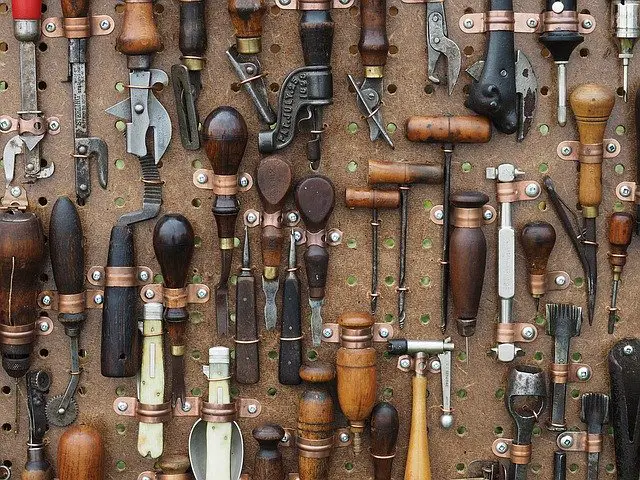
Antique Stanley hand tools are highly sought after, and there is a reason why. The aesthetics of these tools is unmatched, given the wooden handles and the highly detailed metal surfaces. The wood used on the handles is mostly from Brazillian rosewood, which is highly durable. Such a combination has led to the longevity of these tools and their increased demand in time. Here’s an antique & collectible Stanley tools guide to use;
You also don’t want to miss our antique collectible collection:
Are You Looking For a Collectible?
Before you start searching through the internet looking for an antique Stanley hand tool, you first need to decide whether you are looking for a collectible or just any model. It will save you the time of going through multiple options and getting confused, and ensure you get exactly what you’re looking for.
Although antique Stanley tools are considered valuable, not all are valuable and it’s best to look for a guide with current prices for antiques. However, you can expect the earlier models to be more valuable. Mostly, antique tools in the market will go for at least 50% to 70% of the current retailing price of the product.
If you are looking for a collectible, the older tools that are rarely available but are still good quality, you need to be sure of what to look for. It can be quite challenging to tell the difference between a collectible and the tools, some of which are knock offs or newer models. Below is how to tell the difference between collectible Stanley tools and the rest:
The beech handles will be slightly larger or higher, where Stanley tools mostly used rosewood or beech wood. The design of the handles enhanced the user’s comfort when using the tools.
The patent number – while not all tools from Stanley’s antiques are patented, most of the collectibles and old tools that people look for had patents that date back to the 1940s. Such a patented Stanley tool will be more valuable than an older model from the same period with no patent.
One of the reasons why Stanley tools are highly sought after is their intricate details. The metallic part of a collectible tool will have such decorations engraved on the sides.
What to Look For
When collecting a collectible, not just for the Stanley tools, it’s best to only go for tools that interest you and you love instead of collecting as an investment.
Where to Purchase Antique Stanley Hand Tools
The good news is that there are several online shops where you can purchase these antique Stanley hand tools, whether you’re looking for a collectible or just an older model. Here’s what you need to consider when looking for an antique Stanley tool;
- The tool’s original box or packaging
- Any missing parts
- The tidiness of the tool, and whether it needs a lot of cleaning
- Any cracks on the wooden parts like the handle
- Rusted areas on the metallic surface
- Any required repairs
1. Jim Bode Tools
Jim Bode Tools site has quite a collection of antique hand tools, including Stanley tools. The site is a bit challenging to navigate if you are looking for tools from a specific manufacturer since it lists tools in categories. If you are looking for a particular manufacturer’s tools to see what the site has, you can do a search and it will give you a list of available tools, like this search for Stanley tools.
2. The Best Things
The Best Things site offers quite a variety of Stanley tools, with clear descriptions of the tools conditions. It also lists the model numbers for the tools and the tool’s age where possible.
3. Bob Kaune – Antique & Used Tools
Bob Kaune shop for antiques and used tools focuses mostly on bedrock types. However, it has a dedicated page for Stanley planes and other Stanley tools like hammers, levels, chisels, rules, and gauges.
4. Patented Antiques
There are many antique tools on Patented Antique’s site to choose from, including Stanley tools. The site is easy to navigate, considering there are particular pages for Stanley planes. However, it gets a bit complicated when it comes to individual searches in case you want to run a particular keyword.
This is the best book guide for identifying and getting information on Antique Stanley tools:
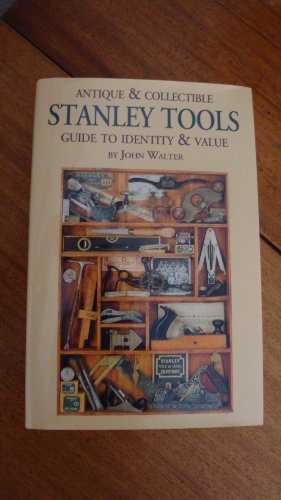
- Walter, John (Author)
- English (Publication Language)
- 455 Pages – 04/28/1990 (Publication Date) – Tool Merchant (Publisher)
How to Determine the Value
An antique tool’s value will depend on the below factors;
- Its rarity
- How desirable the toll is
- Its condition and that of the toolbox, if it’s available
- The ownership history of the tool
On most occasions, collectors use the Fine Tool Journal Classification System to determine the value of an antique tool. The list has a criterion of features like finish, usability, repair, wear, and surface a tool must meet. When determining the value of the antique tool, you connoisseur the condition of each of these features as either:
Greenlight:
- New
- Fine
- Good+
- Good
Yellow Light
- Good
Red Light
- Fair
- Poor
Alternatively, you can purchase this antique & collectible Stanley tools guide for better guidance on what to consider when buying antique Stanley tools.
This beginner’s guide to identification and value for collectors of Stanley planes is a must-have
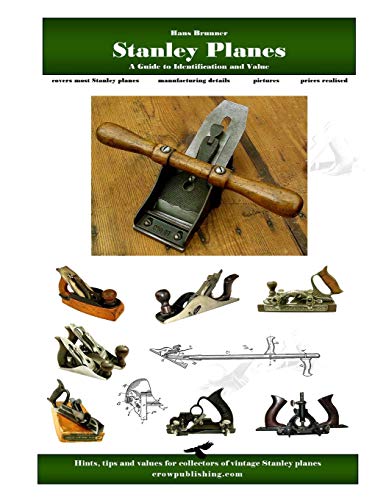
- Brunner, Hans (Author)
- English (Publication Language)
- 46 Pages – 06/17/2015 (Publication Date) – CreateSpace Independent Publishing Platform (Publisher)
Popular Woodworking Tools from Stanley’s
Stanley’s woodworking tools are the company’s most desirable tools for most collectors. Some of the common planes collectors look for include;
- Block plane
- Bench plane
- Fore plane
- Chute board plane
- Wood scrapper
- Rabbet plane
- Router plane
- Dados
- Plow plane
- Dovetail plane
- Grooving and tonguing plane
- Scrub plane
- Chamfer plane
- Adjustable beading plane
Other antique tools from Stanley collectors look for are;
- Saws
- Clamps
- Rulers
- Rounding tools
- Jointer gauge
- Chisels
- Bench brackets
- Bit top
- Levels
The bedrock planes also have high demand, which is all metallic and was released between 18980-01940s. These are also most costly, going for at least double the price of what any standard tool from that era would cost, all factors considered equal.
Check out one of the most famous and handy Stanley Antique Tool we all like:
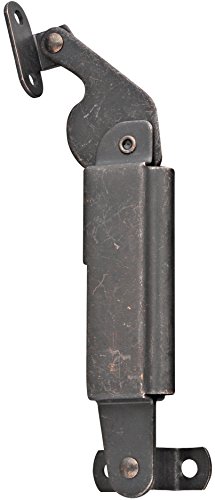
- Authorized Replacement from National Hardware Stock #N208-678
- Manufactured from steel
- Spring loaded supports are for right hand mount
- Makes toy boxes, tool boxes, etc. safer.
- LifeSpan Limited Lifetime Warranty
Guide for Collecting Antique Hand Tools
Apart from Stanley woodworking tools, there are other brands of antique hand tools in the market for collectors. If you are looking for more options, here’s a guide for your collection hunting escapades;
1. Saws
Antique saws come in various designs and styles. The most outstanding and desires antique saws are the Disston models, which have a golden medallion on the handle and a stamp of the company’s name on the spine.
When buying an antique saw, consider the below;
- Disston, Atkins, and Simonds models
- The condition of the blade – consider its straightness and rust-free
- Handles – beech and apple woods are some of the high-quality woods
- Split or missing nut screws on the handle
- Unique features like keyholes
2. Planes
Wood planes are for holding a chisel in place when shaping or thinning wooden boards. Planes are among the most popular woodworking tools for collectors. Before the mass production of planes, most carpenters bought the blades from blacksmiths and curved their own planes. Such collections will have personalized carvings and initials, and they are quite valuable. When buying an antique plane, here’s what to look for;
- The wood used on the knob and tote – needs to be Brazillian rosewood, birch, or beech
- Planes from Stanley tools company
- Victor block planes
- The material of the metal surface – bets material is nickel and brass with exquisite embellishments
- Details of the planemaker, like the name and their town of residence
3. Wrenches
While wrenches work the same way they did back in the days, the style of the older models is what makes them more valuable to a collector. When looking for an antique wrench, ensure you look for one that meets the below criterion;
- Has a wooden adjustable handle
- Comes with one handle plus an adjustable wrench and a precursor
- Has a unique cutout design on the handle
4. Hammers
Like wrenches, the functions of hammers are still the same over the years. What has changed, though, are the shapes and the materials. That makes antique hammers a catch, and here’s what to look for;
- A three-piece hammer – has a removable handle making it easy to store
- Materials like copper, wood, brass, and lead
- Adjustable head
- Multiple and unique heads for multipurpose usage
5. Clamps
There is a variety of antique clamps, which will even depend on usage. The types of collectible clamps to consider include;
- Bird clamps – for sewing
- Jeweler clamps
- Blacksmith clamps
- Picture framing clamps
6. Axes
Axes are still as handy as they were in the old age, and the collectibles come in various categories, like;
- Broad axes
- Single bit axes
- Double bit axes
- Mast axes
- Coachmaker’s axes
- Cooper’s axes
- Goosewing axes
7. Rulers
Rulers were the kings of measurements back the days, long before measuring tapes came along. Some woodworkers still prefer using rulers to take their measurements when working. If you are one of those or are just looking for an antique ruler for your collection, here’s what to consider;
- A ruler with other additional features like squares, compass, or levels
- Foldable rulers, like Stanley zig-zag ruler that has 15 foldable places
- Cruising stick
8. Plumb Bobs
Plumb bobs are suspendable weights designed to hang “absolutely true”. This makes it possible for a worker to find the true vertical. Most antique plumb bobs had unique shapes like carrots, turnip, or pears. Collectors usually desire the below plumb bombs;
- Plumb bobs with metallic materials, like brass with intricate designs
- Plumb bobs made from exotic woods
- Plumb bobs made from ivory, stones, or precious metals
9. Hand Drills
You will find different designs, styles, and shapes of hand drills, even in the antique market. Collectors prefer antique hand drills, thanks to the durable materials used and the rarity of these tools. Collectors mostly desire the below;
- Hand drills with the manufacturer’s stamp for easy dating
- Hand drills with ivory or precious metal inlays
- Hand drills with wooden handles and hole for holding bits
- Wooden hand drills and the ends are made of ivory
- A long hand drill and a brace with a twisted bit of an auger
Below is a sample list of antique woodworking tools to look for;
- No. 3 Stanley Bailey smooth plane
- No. 4 Stanley Bailey 1910 smooth plane
- No. 5c Union Jack plane, with corrugated bottom
- No. 05 Shelton 1932 Jack plane, Patent No. 1914609
- No. 1455 Millers Falls low angle block plane
- No. 6 Falcon, Made in Australia, smooth plane (A Pope Product)
- No. 45 Stanley 1896 molding plane
- No. 22 Ohio Tool Company 1892 Transitional smooth plane
- No. 5 Stanley Bailey Jack plane
- No. 4 National 1882 smooth plane
How to restore antique tools
Old tools are more than just fancy collectables for your workshop. Unlike a charity or donations shop, antique tools can be restored.
You can restore it properly, it will work like any normal product, if not any better. The most common restoration method uses vinegar, which is an organic product. Harsh chemicals might do more damage to the quality of the antique too, so its best to use organic products.
What you can do is soak the tool in the vinegar in bits for a period, then grind off the rust or dirt immediately after lifting it from the vinegar. After this, dry the surface with a clean piece of cloth and use cleaners like citrus wax for preventing rusting.
If the tool is in the worst shape, you can forgo the vinegar bit and get straight to using a wire brush. While this is a faster method, it also leads to the loss of value and the beauty of the antique tool.
Below are steps to follow for restoration;
- Detach the wooden components – the first step involves soaking the antique tool in vinegar. However, you need to detach the wooden component to avoid spoiling them through oxidation. If it’s not possible to remove the wooden components, like the handle, ensure these parts don’t come into contact with the vinegar when you soak the other parts with rust.
- Thorough cleaning – after detaching, get to scrubbing using water, dish soap, and a non-metallic scrubber. Try to wash off most of the dirt, then dry the tool and apply some oil or wax cleaner to ensure it doesn’t start to rust.
- Soak in white vinegar – soak the metallic parts in white vinegar, and ensure the parts are sully immersed for at least 48 hours depending on how rusty the parts are. It’s advisable to keep checking the progress when soaked to ensure the parts don’t overstay in the vinegar. Ensure the parts don’t stay in vinegar for more than 48 hours, else the metallic parts start to erode. Although vinegar is not harmful, you can use a pair of latex gloves, especially if you have sensitive skin.
- Protecting against rust – once the vinegar has washed off the rust and all the dirt, take it the parts from the vinegar and wipe them clean using a dry towel. Once dry, apply a coat of citrus wax cleaner or oil that will help protect the parts against flash rusting. Flash rusting is fast and can begin immediately the metallic parts are out of the vinegar.
- Sharpening – when all the above steps are done, you can sharpen the parts that need sharpening, and test them out.
Stanley Tools has been around for ages and has some of the best woodworking tools. For collectors, however, its antique tools are worth hunting for their durability and effectiveness. There are guides for buying these, like this antique & collectible Stanley tools guide. But Stanley Tools are not the only available antique woodworking tools you can consider as a collector. Our guide provides suggestions for other antique tools to consider as well as how to determine the value of an antique tool and how to restore it.
Remember to check out our favorite collectors collection for identifying Stanley tools:

Hi, I’m Sal Muller of Tooltrip.com. My DIY experience led me to understand essential power tools for home projects. Tooltrip.com guides enthusiasts and professionals in choosing right tools for any job. I provide concise top tool reviews for easier, efficient DIY.